Every Sunday evening, the same scene unfolds in countless homes across DC, Maryland, and beyond. A child who was laughing and carefree just hours ago grows quiet. Their shoulders tense. The complaints begin: stomachaches, headaches, sudden tiredness. When you ask what’s wrong, the answer comes reluctantly: “I don’t want to go to school tomorrow.”
If this sounds familiar, you’re not alone. School anxiety in DC children has become an increasingly common concern among parents, and these “Sunday night scaries” are often the first visible sign that something deeper is troubling your child.
When Sunday Evenings Become Concerning
Sunday night anxiety looks different in every household, but the underlying emotion is often the same. Some children withdraw into silence. Others become irritated or tearful. Many parents report that bedtime becomes a negotiation, with children inventing reasons to delay sleep; anything to postpone the inevitable Monday morning.
These moments of distress aren’t just about not wanting fun weekend time to end. They’re often signals that a child’s school environment isn’t meeting their fundamental needs for safety, belonging, and authentic engagement.
Recognizing Signs of School Burnout in Kids
School-related stress and burnout in elementary-aged children manifests in ways that parents sometimes mistake for other issues. The signs of school burnout in kids can include:
- Physical symptoms that appear on school mornings: Genuine stomachaches, headaches, or fatigue that manifest as a sign of anxiety before Mondays, beginning of term, or other milestones, like joining a new grade.
- Changes in emotional regulation: A typically cheerful child becomes irritable, withdrawn, or anxious, especially when school is mentioned.
- Resistance to previously enjoyed activities: When a child who once loved reading suddenly refuses to pick up a book, or when art projects that once brought joy now trigger frustration.
- Sleep disruption: Difficulty falling asleep on Sunday nights, nightmares about school, or exhaustion that doesn’t improve with rest.
- Declining academic confidence: Statements like “I’m not good at anything” or “Everyone else is smarter than me,” even from children who are performing well academically.
What Children Are Really Telling Us
When children express reluctance about school, they’re often communicating something important about their daily experience. In traditional educational settings, the focus on standardized achievement, rigid scheduling, and one-size-fits-all instruction can leave many children feeling unseen, unheard, or inadequate.
Children experiencing school anxiety often describe feelings that adults might recognize in their own work lives: the sense of being constantly evaluated, the pressure to perform in ways that don’t align with their natural strengths, the exhaustion of maintaining focus in environments that feel chaotic or overstimulating.
The challenge for parents is that conventional wisdom often suggests the solution is to help children adapt to school, rather than questioning whether the school environment itself might need to change.
The Missing Element: What Children Actually Need To Thrive At School
When we look closely at what helps children thrive, several essential elements emerge. Young learners need environments where they can move their bodies regularly throughout the day, not just during recess. They need time to pursue their curiosity deeply, rather than constantly switching subjects based on a bell schedule. They need to feel genuinely known by adults who understand their unique strengths and challenges.
Perhaps most importantly, children need to experience themselves as capable, valued members of a community where their contributions matter. In schools where students are primarily receivers of instruction rather than active participants in their own learning, this sense of meaningful belonging can be difficult to establish.
Children’s social and emotional well-being directly impacts their ability to learn. When a child spends their days in a state of stress or disconnection, their brain has less capacity available for academic learning. The Sunday night scaries aren’t separate from academic performance—they’re deeply connected to it.
A Different Approach to Elementary Education
Bethesda families are increasingly seeking an alternative to public education. These schools typically prioritize relationships over rigid schedules, understanding that children learn best when they feel emotionally safe and genuinely connected to their teachers and peers.
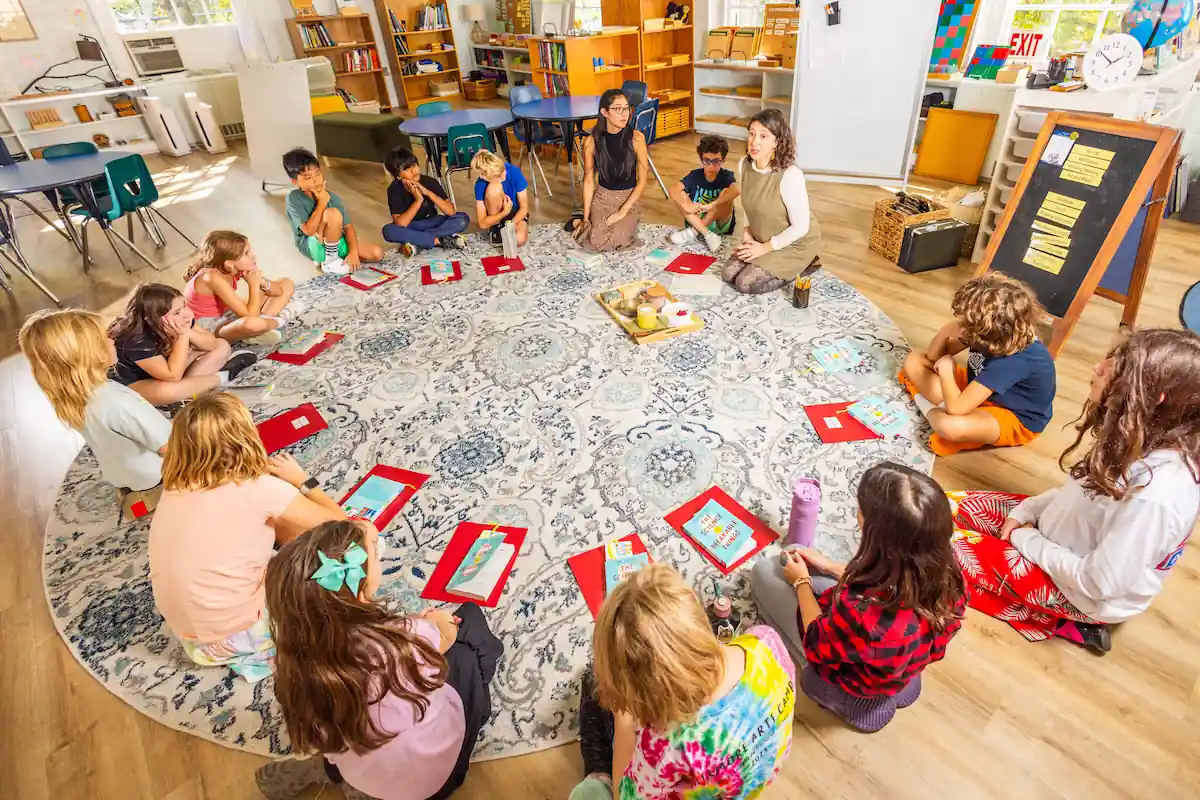
In these environments, learning looks different from what many parents experienced in their own childhoods. Students might spend an entire morning absorbed in a single project that integrates mathematics, literacy, science, and art. They might work at tables, on the floor, or outside, choosing positions that help their bodies stay regulated. They might learn alongside children of different ages, developing leadership skills and empathy rather than constant comparison with same-age peers.
The physical environment in these schools tends to feel calmer and more intentional. Materials are accessible and beautiful, inviting exploration rather than requiring permission. There’s space for movement, quiet reflection, collaborative work, and independent focus. The rhythm of the day honors children’s natural attention spans and need for variety.
A Montessori Experience At Oneness-Family School
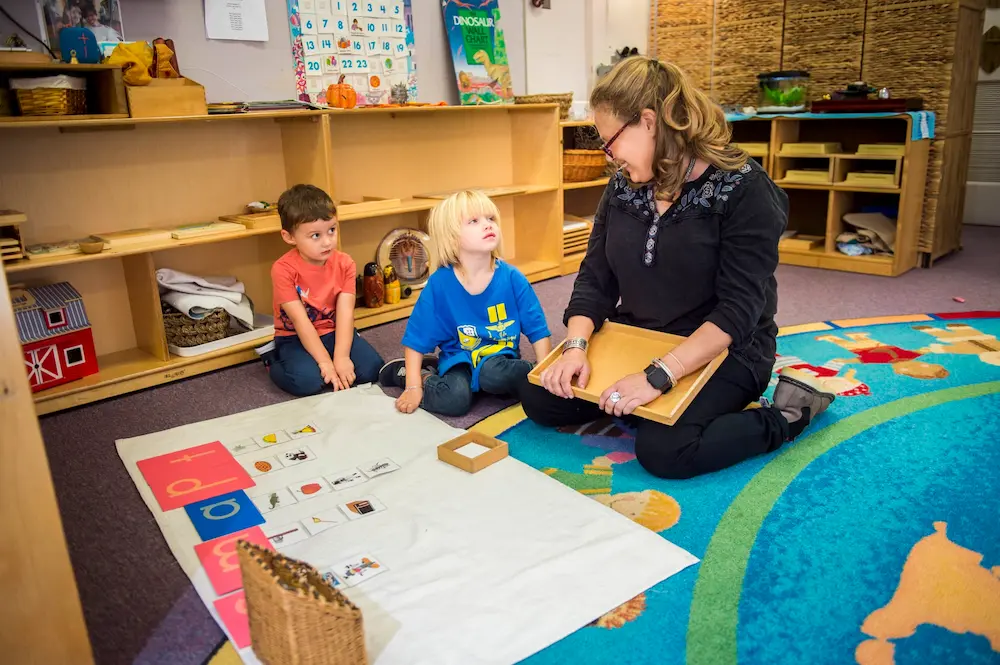
Montessori education provides a child-centered approach that fosters self-directed learning, independence, and holistic development. With mixed-age classrooms and personalized guidance, students engage in hands-on activities, peer learning, and critical thinking, cultivating a love for learning and preparing them for future success.
At Oneness-Family School, Montessori educators focus on creating an environment that encourages exploration and creativity, where children are free to choose their activities and work at their own pace. The materials used in Montessori classrooms are designed to be tactile and concrete, offering students opportunities to engage in learning through their senses.
This approach helps children develop problem-solving skills, self-discipline, and a sense of responsibility, as they are given the freedom to make choices while being gently guided by trained instructors.
We believe in a strong emphasis on respect for the child and their individual learning journey. Teachers observe students closely, tailoring their teaching to each child’s unique developmental needs and interests. This personalized approach helps children build confidence and a sense of autonomy, allowing them to become active participants in their own education.
When the Anxiety Lifts: What Parents Notice
Parents who transition their children to more supportive learning environments often describe a transformation that extends far beyond Sunday evenings. The physical symptoms diminish first—the stomachaches, the sleep disruption, the Monday morning tears. Then comes a shift in the child’s relationship with learning itself.
Children in environments that honor their developmental needs and individual learning styles often experience:
- Restored confidence and curiosity: A willingness to try new things and make mistakes without fear of judgment
- Improved self-regulation: Better ability to manage emotions, resolve conflicts, and advocate for their own needs
- Genuine enthusiasm for learning: Intrinsic motivation that replaces the need for external rewards and consequences
- Stronger relationships: Deeper friendships and more authentic connections with teachers
- Sunday evenings without dread: The simple but profound shift of a child who looks forward to Monday morning
Questions to Ask When Considering a Change
If your child is experiencing school-related anxiety, certain questions can help clarify whether their current environment truly serves their needs:
Does your child’s school allow for significant movement throughout the day, or are students expected to remain seated for long periods?
- Are children grouped flexibly based on their current needs and interests, or primarily by age and perceived ability level?
- Do teachers have time to truly know each child as an individual, or are class sizes and demands such that personalized attention is limited?
- Is there space in the curriculum for children to pursue topics that fascinate them, or is the schedule entirely predetermined?
- How does the school approach mistakes and struggles—as shameful failures to avoid, or as valuable opportunities for growth?
- Does your child come home energized by what they’re learning, or depleted by the effort of making it through the day?
Supporting Your Child’s Well-Being Right Now
Whether you’re considering a school change or working within your current situation, there are ways to support a child experiencing school anxiety:
Listen without immediately problem-solving. Sometimes children need to express their feelings before they’re ready for solutions. Create space for them to talk about their experience without judgment.
Validate their emotions. Avoid minimizing their concerns with phrases like “everyone feels nervous” or “you’ll be fine.” Instead, acknowledge that their feelings are real and understandable.
Focus on connection, not correction. Sunday evenings and Monday mornings aren’t the time for lectures about attitude or responsibility. Your child needs to feel your support, not your disappointment.
Look at the whole picture. Keep notes about when anxiety appears, what seems to trigger it, and what helps your child feel calmer. Patterns often emerge that point toward specific environmental factors.
Trust your instincts. You know your child better than anyone. If something feels wrong, it deserves attention, even if teachers or other parents suggest you’re overreacting.
The Foundation of Lifelong Learning
Children’s elementary years establish their fundamental relationship with education, community, and their own capabilities. When those years are marked by chronic stress and disconnection, the impact can extend far beyond a few difficult Sundays.
But when children experience elementary school as a place where they genuinely belong, where their questions are valued, and where they’re supported in developing at their own pace, something profound happens. They internalize the belief that they are capable, that learning is joyful, and that they have meaningful contributions to make to their community.
Maryland families often take this long view, understanding that true academic success is inseparable from emotional well-being and genuine engagement. These schools recognize that the goal isn’t simply to prepare children for the next grade level, but to nurture young people who will approach life with confidence, curiosity, and compassion.
Moving Forward with Hope
If Sunday nights have become a source of stress in your household, please know that this isn’t simply “how school is” for all children. Different approaches to education exist, and many DC-area families have found that a change in environment can transform not just Sunday evenings, but their child’s entire relationship with learning.
The decision to explore alternative educational options isn’t about giving up on your child’s current school or admitting failure. It’s about honoring what you observe in your own child and having the courage to seek an environment where they can truly flourish.
Your child’s anxiety is communication. It’s worth listening to.
Learn more about how we support children’s social-emotional learning and well-being in an environment designed around how children actually learn best.